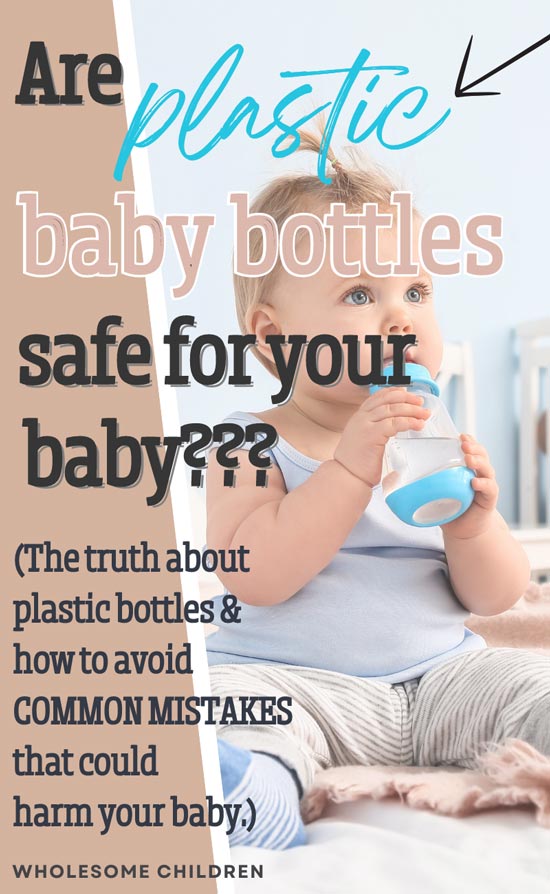
Plastic baby bottles are widely available, affordable, and convenient to use. But are they safe for your baby? Is it OK to use plastic bottles or should you avoid them whenever possible? Learn about the pros and cons of plastic baby bottles including any potential health risks associated with this type of a feeding bottle so that you can make an informed decision when it’s time to purchase baby bottles.
(Truth be told, plastic or not, no baby bottle material is perfect and 100% problem-free. Even with glass bottles there is a potential for exposure to toxins if you don’t choose right!)
In this article:
- Pros & cons of plastic baby bottles
- Health risks associated with plastic bottles
- Are plastic baby bottles safe for baby?
- The safest plastic baby bottles
- FAQ about plastic baby bottles
Pros & cons of plastic baby bottles
Pros:
- cheap
- lightweight
- indestructible
- widely available
Cons:
- chemical leaching
- exposure to microplastics
- odor retention
- discoloration
- best washed by hand
Plastic remains a popular choice in bottle feeding. It’s no surprise – plastic baby bottles are lightweight, virtually unbreakable, and they are relatively cheap and easy to come by.
On the other hand, plastic can absorb odors and is prone to becoming stained and cloudy, so even though a plastic bottle tends to be cheaper than other baby bottle materials initially, in the end you may still spend considerably more as you replace your bottles that no longer look (or smell) acceptable.
In addition, plastic is the least stable material of all baby bottle options available, ultimately receiving the lowest score in the safest baby bottle material comparison. Plastic is prone to leaching chemicals, so if material safety is of utmost importance to you, you might want to steer away from plastic bottles and look into alternatives like glass, stainless steel, or even silicone baby bottles.
Health risks associated with plastic baby bottles
As practical as plastic baby bottles may be, they pose some risk of exposure to chemicals and particles that are either problematic or haven’t been studied for safety.
In this section we’ll discuss:
- The ban on BPA in baby bottles
- BPA-free baby bottles
- Polypropylene baby bottles
- Microplastics in baby bottles
The ban on BPA (Bisphenol A)
In 2012 many parents breathed a sigh of relief after the U.S. Food and Drug Administration (FDA) banned bisphenol A (BPA) from plastic baby bottles and children’s drinking cups. BPA is a controversial plastic additive used in the making of certain plastics like polycarbonate plastic which was often the material of choice for baby bottle manufacturers before the ban.
BPA is not acutely toxic so there are no immediate adverse effects after exposure, but this chemical has been shown to act as an endocrine disruptor. Chemicals with these properties can throw off the body’s hormonal balance – increase or decrease hormone levels, mimic hormones, or alter the natural production of hormones.
BPA exposure has been linked to:
- early onset of puberty
- reproductive issues
- obesity
- diabetes
- heart disease
- liver damage
- increased rates of certain cancers
Newer research suggests that BPA can alter the nervous system development as well, causing adverse behavioral outcomes in children.
Are BPA-free baby bottles safe?
The decision to keep BPA (bisphenol A) out of baby bottles was a positive change in the attempt to make baby bottles safer, especially considering that many babies are exclusively bottle-fed from birth and thus their cumulative exposure to BPA could be significant. However, even with the BPA ban in place, plastic baby bottles are not in the clear.
BPA-free plastic still leaches chemicals! (Including BPA…)

- BPA-free plastic is not 100% BPA-free.
The truth is, BPA-free plastic is not entirely free of BPA. BPA-free plastics have been shown to leach small amounts of BPA (which is worrisome, given that even low levels of BPA exposure might be problematic).
- Chemical replacements for BPA are equally concerning.
Some plastics labeled BPA-free can just contain a BPA substitute. Following the push to remove BPA from polycarbonate plastic production, the industry essentially replaced bisphenol A with other bisphenols. As it turns out, the common BPA replacements such as BPF and BPS (bisphenol F, bisphenol S) and others seem to be just as bad, if not worse than BPA.
- You can probably ignore BPA-free labeling on baby bottles.
BPA is still a concern when it comes to plastic baby bottles, but much less so with the bottles sold today. These days the vast majority of plastic baby bottles and various bottle components are made of polypropylene which is a safer type of plastic than polycarbonate and made without BPA. A small percentage uses polyamide, which is also made without bisphenols. While these types of plastics are made without bisphenols, a contamination during the manufacturing process is a possibility and perhaps the reason that bisphenols were detected in these bottles nonetheless.
Are polypropylene baby bottles safe?
Although polypropylene baby bottles significantly reduce the risk of exposure to BPA, other chemicals may still find their way into your baby’s milk when you’re using a polypropylene baby bottle.
Plastic in general is a highly unstable material. Research shows that plastics can leach a variety of chemicals, especially when exposed to common-use stresses such as UV light from sunlight or UV sterilizers, microwave radiation, and heat stress from boiling or dishwashing. Many of these chemicals have been shown to possess the same endocrine-disrupting effects of bisphenols.
On the plus side, polypropylene is considered one of the safest plastics when chemical leaching is considered. But it’s not 100% inert.
No matter the “type of plastic” stated by the manufacturer, the exact chemical composition and the additives used are proprietary and hidden from the consumer. For what it’s worth, pure polypropylene resin is considered stable and unlikely to leach chemicals even when exposed to high heat, but a variety of additives can be used in its production to enhance the functionality of the final product which may gradually seep out with normal use.
Then there is the issue with plastic materials undergoing fragmentation which further increases the risk of exposure to harmful chemicals and endocrine disruptors – microplastics.
Microplastics in plastic baby bottles
Microplastics are tiny bits of plastic, too small for the eye to see, created from the degradation of the plastic material. As the plastic slowly wears out, miniscule pieces start detaching from the surface, which can then seep into the liquids inside the bottle.
Recent research has uncovered that polypropylene baby bottles can release a staggering amount of microplastics when exposed to high temperatures, averaging 4 million microplastic particles per each liter of liquid and even more nanoplastics, which are even smaller than microplastics. The rate of release increases when the bottle is shaken. The study focused on polypropylene baby bottles since they are the most common plastic bottle used nowadays, but all plastics release microparticles as they break down.
Frankly, there is no good way to avoid microplastics today.
These tiny plastic fragments have polluted the entire planet to the point that they’re now found in our water, in the air we breathe, and in the food we eat. Even if you were to cut out all exposure to plastic starting today, microplastics would still be a part of your life.
Are microplastics in baby bottles dangerous for babies?
Little is known about the health effects of human exposure to microplastics. Microplastics contain both the polymeric materials and the additives used in the manufacturing process, so there is a wide spectrum of potential harm that may occur.
In my opinion, just because microplastics are found just about everywhere these days, doesn’t mean it’s safe to add to that exposure through the bottle, particularly since infancy and early childhood is considered the most vulnerable stage of development.
Good to know: If you use bottled water to prepare infant formula, it can contain microplastics as well.
Are plastic feeding bottles safe for baby?
No matter how practical of a material plastic is, there is a strong potential for leaching with plastic baby bottles. The more use the bottle gets, the higher the likelihood of leaching. Repeated use under high temperatures in particular accelerates degradation of the plastic and increases the leaching potential. But know that if plastic is the bottle of your choice, there are ways to minimize these risks.
Although plastics in general are inherently unstable, you can take steps to limit the risks of chemical and particle leaching if you’re using plastic baby bottles or plan on using them in the future:
- AVOID hand-me-down plastic feeding bottles as they may contain high levels of bisphenols.
- MINIMIZE high-temperature situations as high heat helps separate chemicals from the plastic, making them much easier to be consumed. Plastic baby bottles should not be heated in the microwave and are best washed by hand in warm soapy water. If you rely on a dishwasher, always keep all plastic components of the bottle on the top rack.
- GENTLE cleaning is the way to go since abrasion can make plastic more prone to shedding chemicals and particles.
- AVOID vigorously shaking your baby’s bottle to mix the contents since that could lead to an increase in the release of microplastics into the milk.
- THROW AWAY plastic baby bottles that are scratched. Scratched and otherwise damaged plastic can lead to a greater release of chemicals. The grooves can also harbor bacteria which can harm your baby.
Don’t miss: The Best Natural & Non-Toxic Baby Products (2022 Ultimate Guide!)
What are the safest plastic baby bottles?
The majority of plastic baby bottles currently on the market seem to be made with the same class of materials (polypropylene plastic, silicone nipple) and are likely similarly “safe” or “unsafe” – depending on how you choose to look at it.
Plastic is plastic.
There is always some level of uncertainty with plastic, no matter the type of plastic used.
That said, if you feel like plastic is the right choice for you or plastic bottles are the only option for you for financial or other reasons, take note of some of the tips above on how to use plastic baby bottles safely to mitigate some of the most common risks associated with the use of plastic bottles.
Knowing how to use plastic baby bottles safely will make a difference in the amount of chemicals your baby can potentially ingest over time.
FAQ about plastic baby bottles
Are plastic baby bottles dishwasher-safe?
If your plastic baby bottles are labeled “dishwasher-safe,” they can be run through the dishwasher without the risk of damaging the plastic. However, while dishwasher-safe plastic bottles can withstand the high temperatures of dishwashers, chemical leaching in these conditions is likely. Plastic can also warp over time when frequently exposed to high temperatures. Hand cleaning in warm soapy water is best.
If you’re using a dishwasher to clean your plastic bottles, keep the bottles and any dishwasher-safe components on the top rack, bottles face down and nipples upright, to keep the plastic away from the heat source and to avoid dirty water pooling inside.
Are plastic baby bottles microwave-safe?
A microwave-safe plastic baby bottle can be warmed in the microwave without the structural integrity of the bottle being affected. Essentially, all that means is, the bottle won’t melt if you pop it in the microwave.
There are several reasons NOT to use the microwave when warming your baby’s bottle: hot spots can occur which can burn your baby’s mouth and throat, and some of the nutrients can be destroyed, particularly if warming breast milk. In addition, as with any high heat source, chemical leaching can occur.
To be on the safer side, set the bottle in a bowl of warm water or hold under running warm tap water. In addition, warming baby’s bottles is not strictly required. Some babies do perfectly fine with lukewarm or even cold milk.
Is it safe to boil plastic baby bottles?
Research shows that plastic tends to release more chemicals after being exposed to hot water or other forms of high heat. While sometimes exposure to high heat simply can’t be avoided when using baby bottles, such as when you need to sterilize them using hot water, there are measures you can take to minimize the risks of chemical leaching from sterilizing your plastic bottles (SEE BELOW).
Is it safe to sterilize plastic baby bottles?
To sterilize plastic baby bottles safely and minimize the risks of chemical and particle release and transfer to milk, let the bottles cool completely following sterilization in boiling water, then rinse several times with another batch of boiled water that has been allowed to cool down to room temperature. Then, set to dry.
Glass VS. plastic feeding bottles: what’s safer for baby?
All things considered, glass baby bottles are generally safer than plastic bottles. The safest glass bottle will be unpainted as there is some risk of glass paint contamination with heavy metals (an issue that doesn’t seem to be duplicated when it comes to plastic bottles – so there you have one positive thing about plastic baby bottles!).
Final words
Parents are becoming increasingly aware of the potential risks of various baby products that can affect baby’s health. Baby bottles remain among the top concerns due to many different types of bottles being available.
Now that you’re aware of the pros and cons of plastic baby bottles, you will have an easier time deciding on the right bottle for your family.
Naturally, many new parents wonder…
“Are plastic baby bottles safe?”
…Are plastic bottles all that bad? They’re not ideal, but there are ways to reduce the health risks associated with this type of a feeding bottle if that’s how you feed your baby.
Related: